Case study · Research & strategy
Asurion Expert Workspace Messaging Discovery
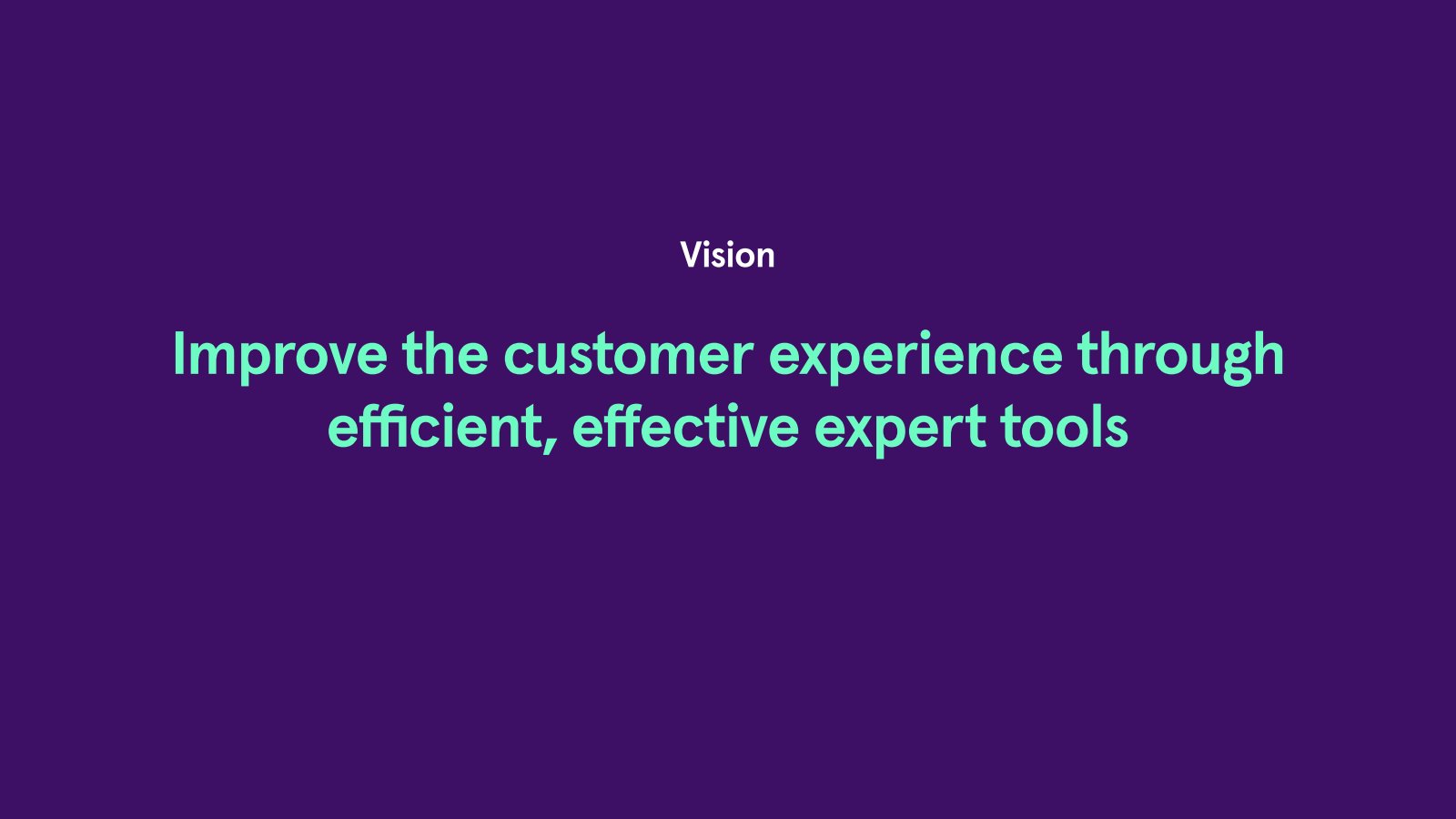
Deep research and design into the real experience behind a live messaging platform.

A live platform, unexamined
Asurion's customer service messaging platform was live and in active use, but no one had looked closely at how it was actually performing. I conducted deep qualitative research across transcripts, live sessions, and customer surveys, then designed a suite of features to address what I found. My goal was to create visibility for common issues for both the customer and Asurion's customer service agents.
How I got there
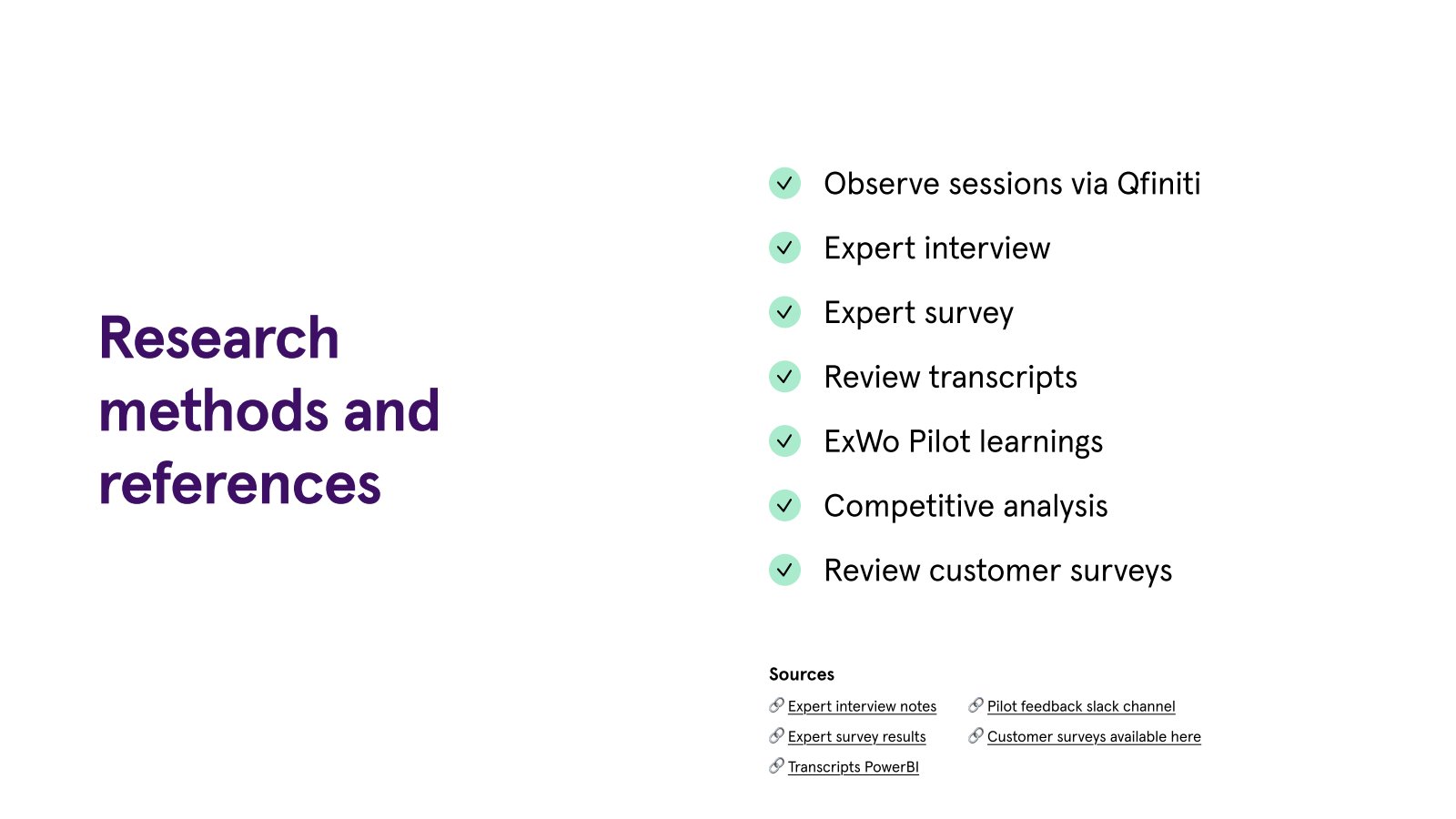
Analyze transcripts
Read through a large volume of real expert-to-customer message transcripts to identify recurring patterns in language quality, flow breakdowns, and missed opportunities.
Session observation
Watched live and recorded sessions of experts interacting with customers in real time — surfacing behavioral patterns that transcripts alone couldn't capture.
Review customer survey responses
Analyzed customer survey responses to cross-reference what users were experiencing and feeling against what the sessions and transcripts were showing.
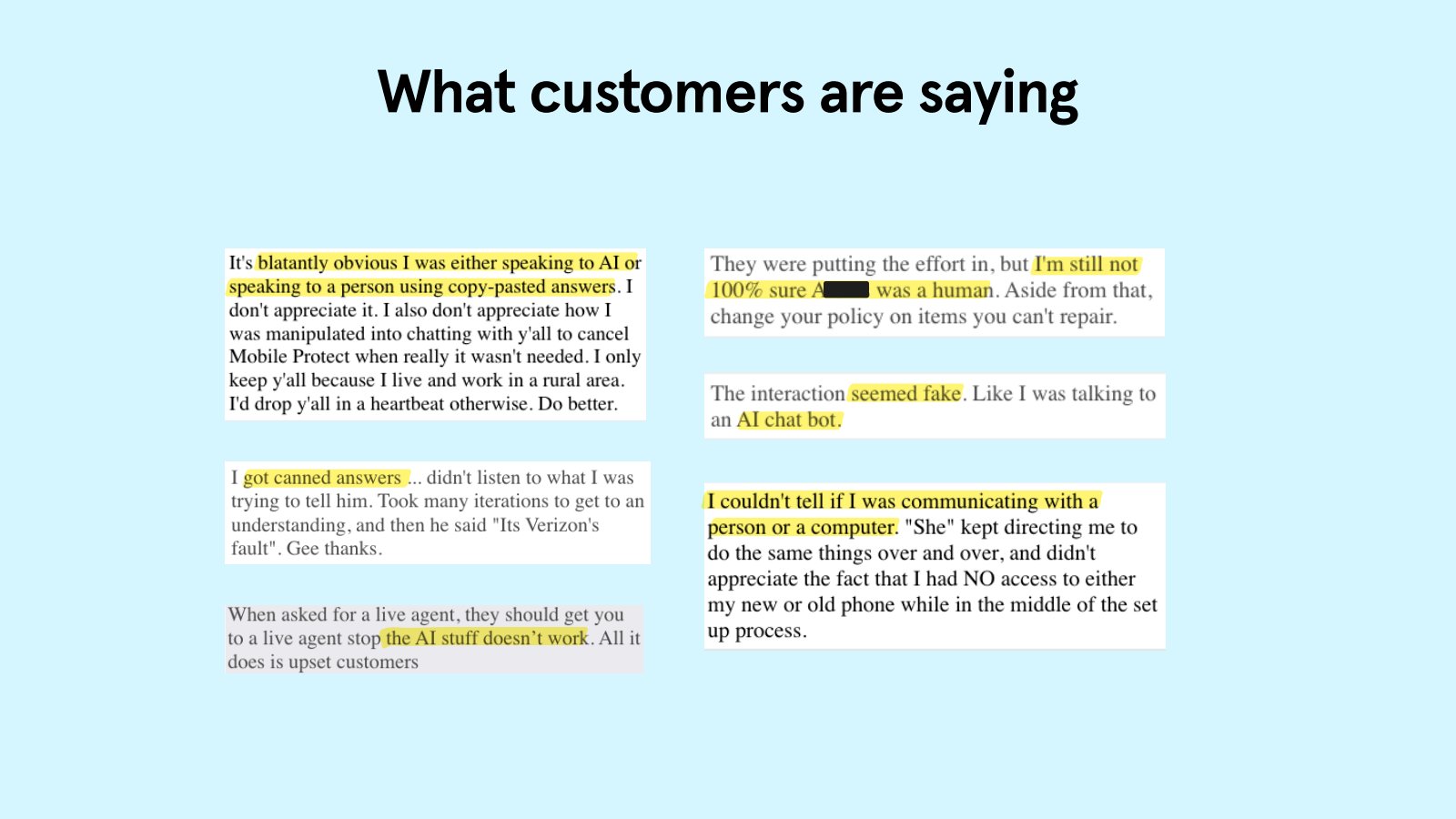
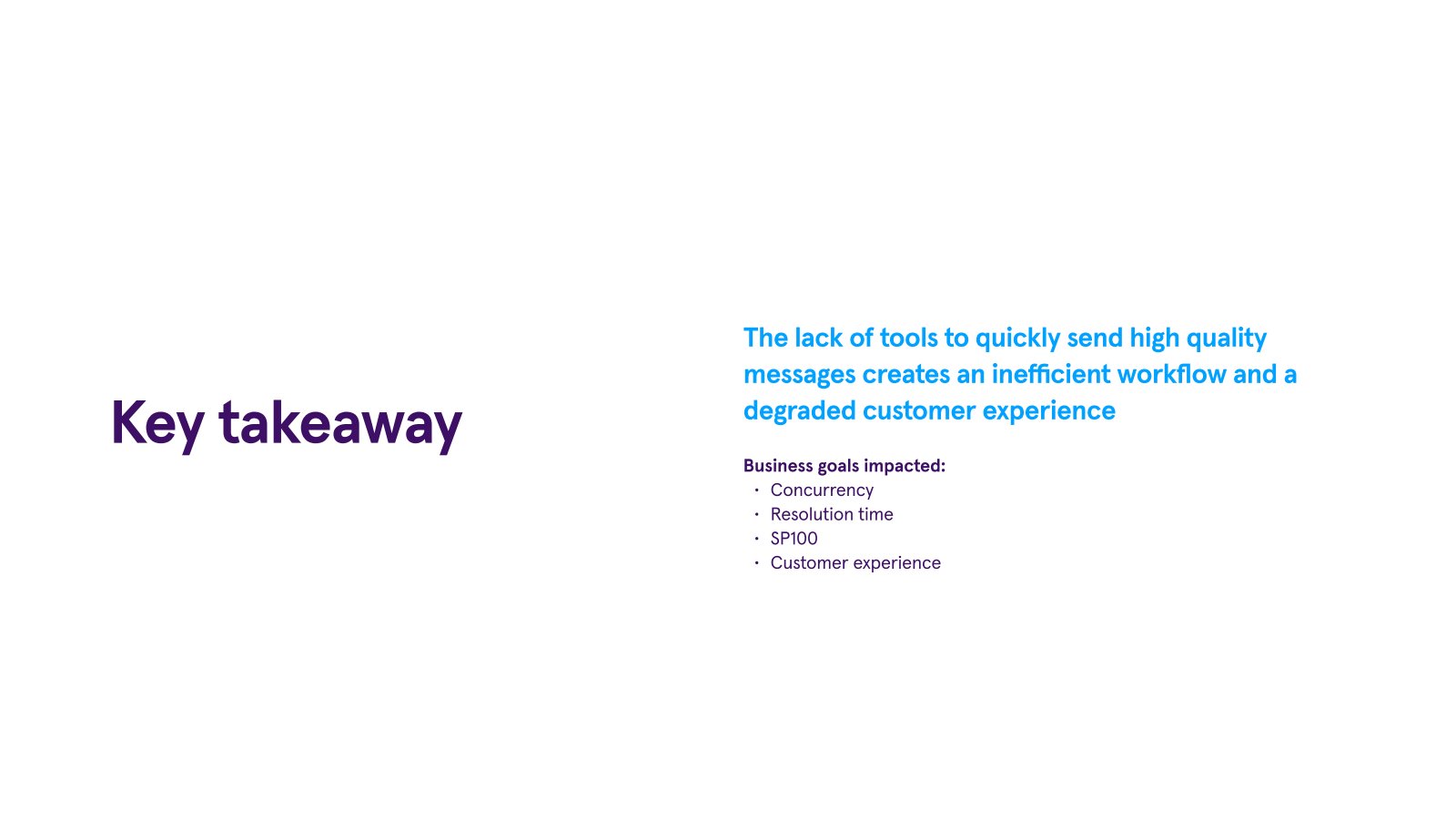
What emerged wasn't one problem but several
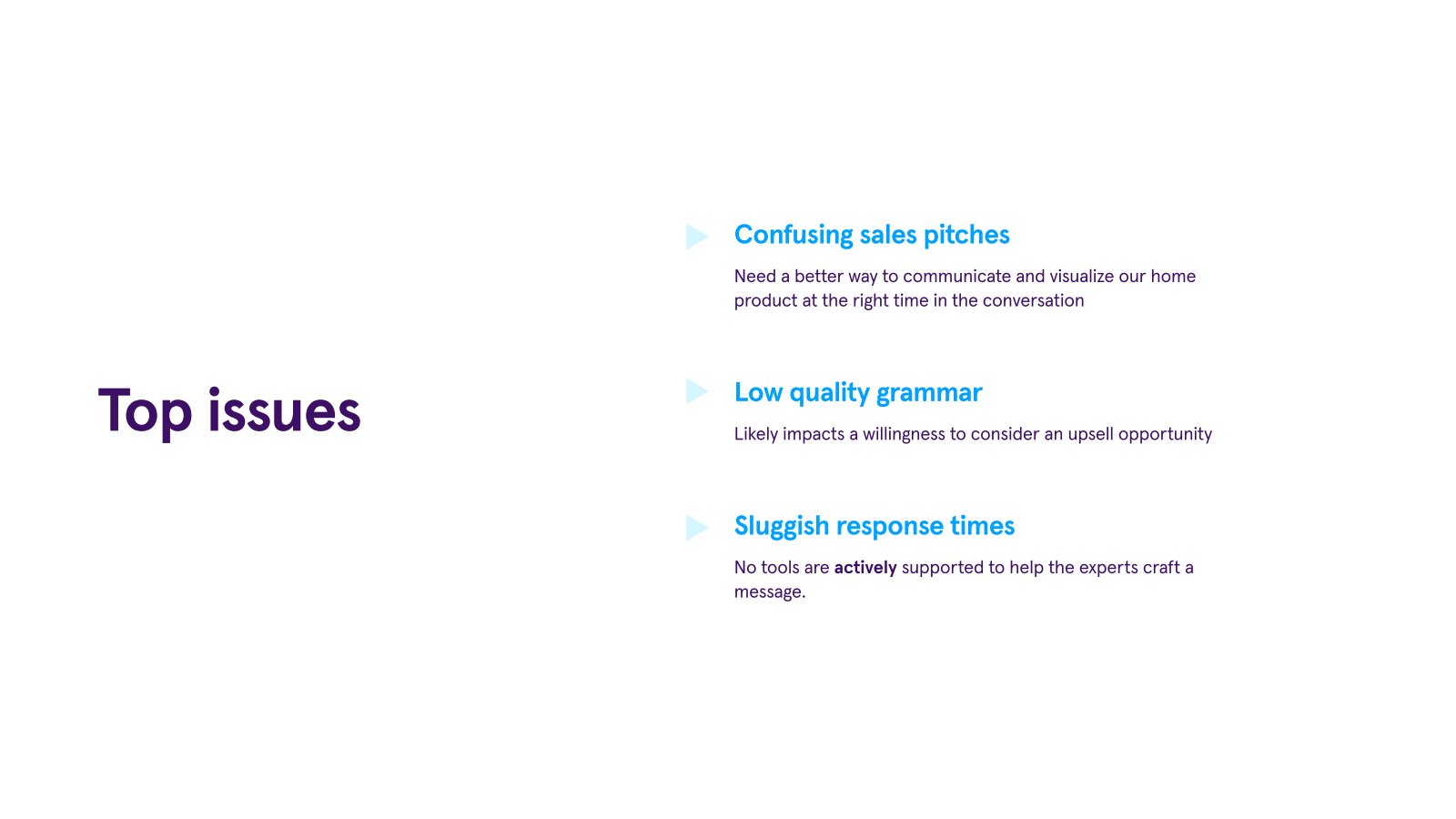
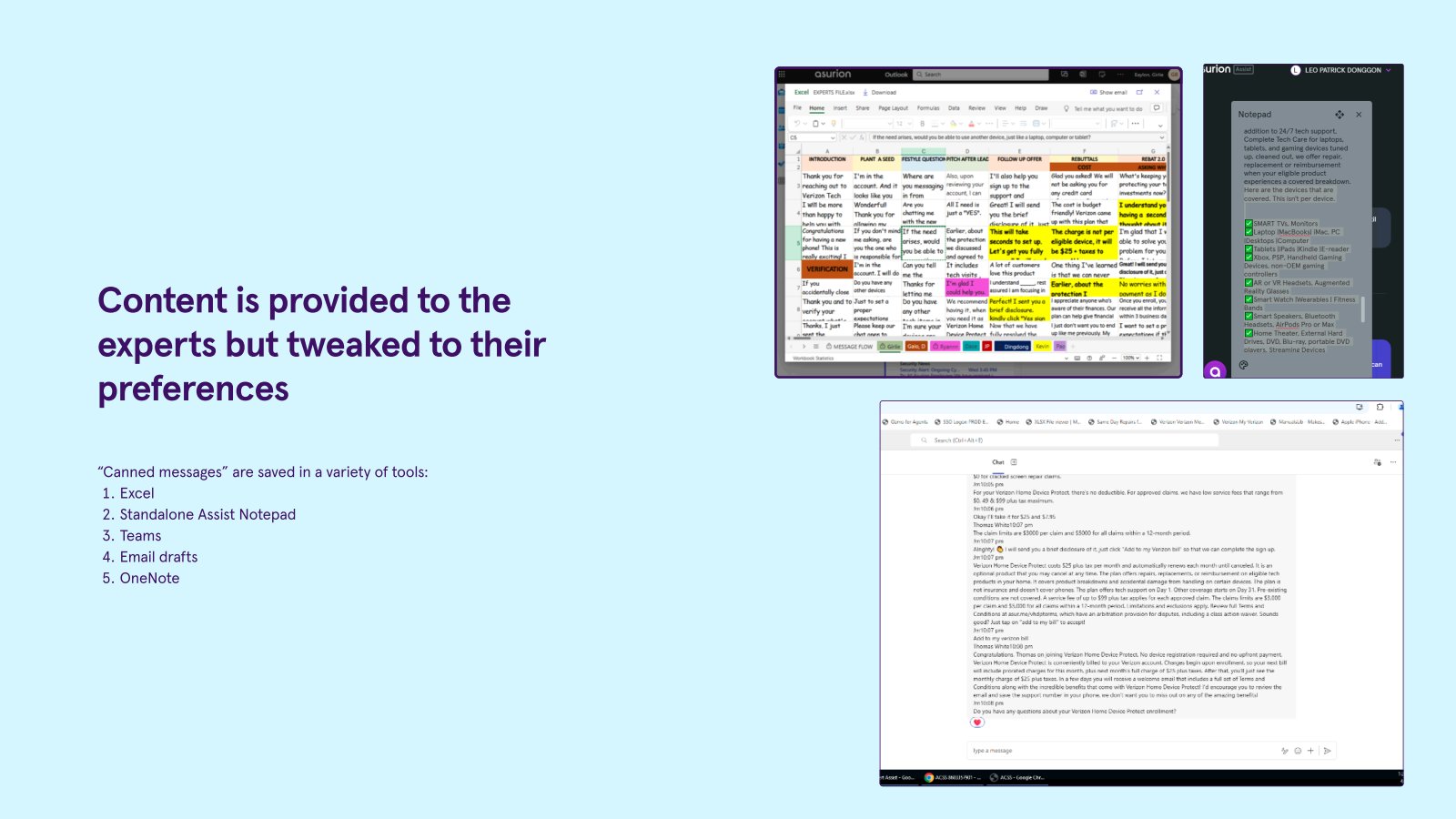
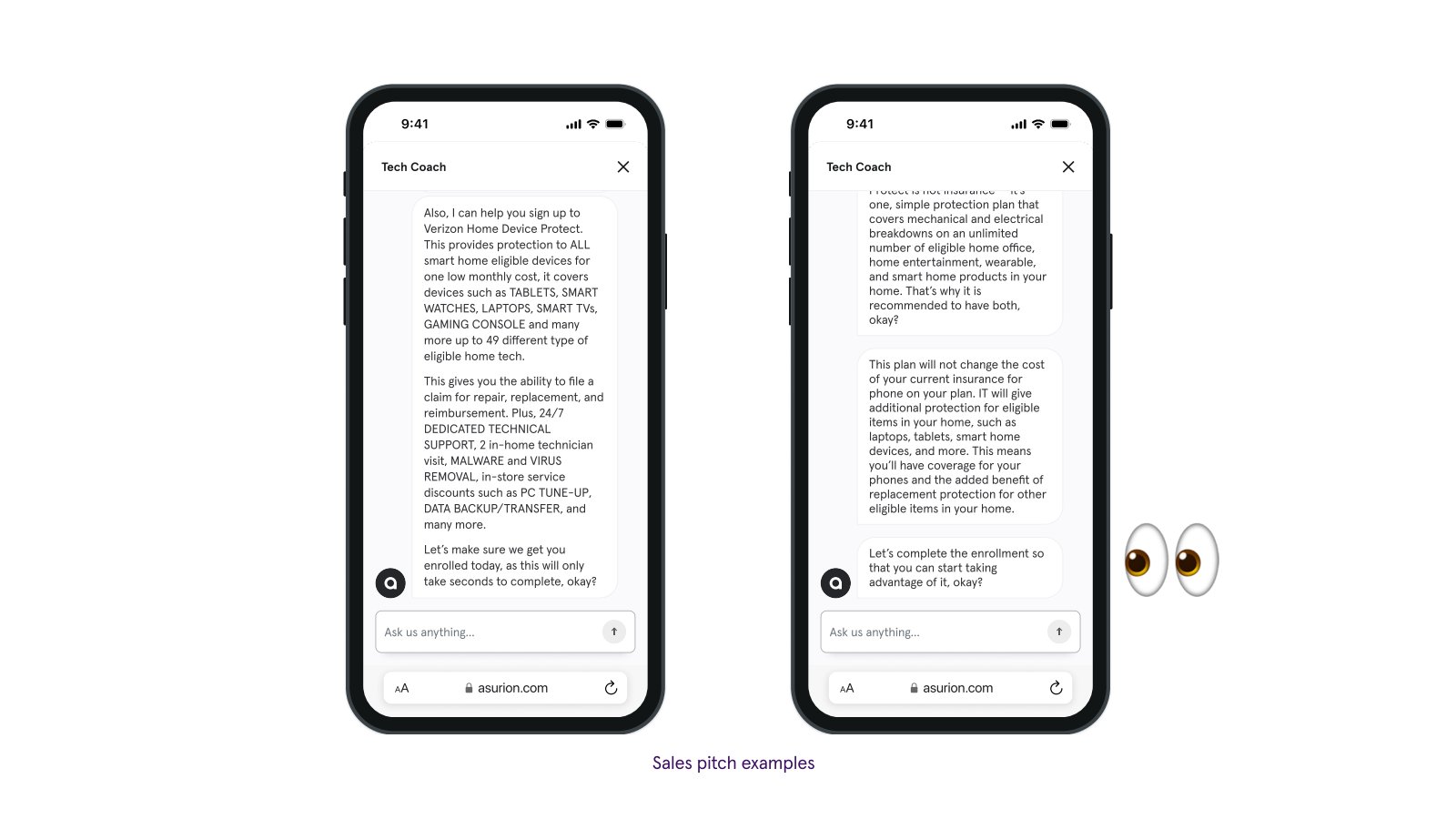
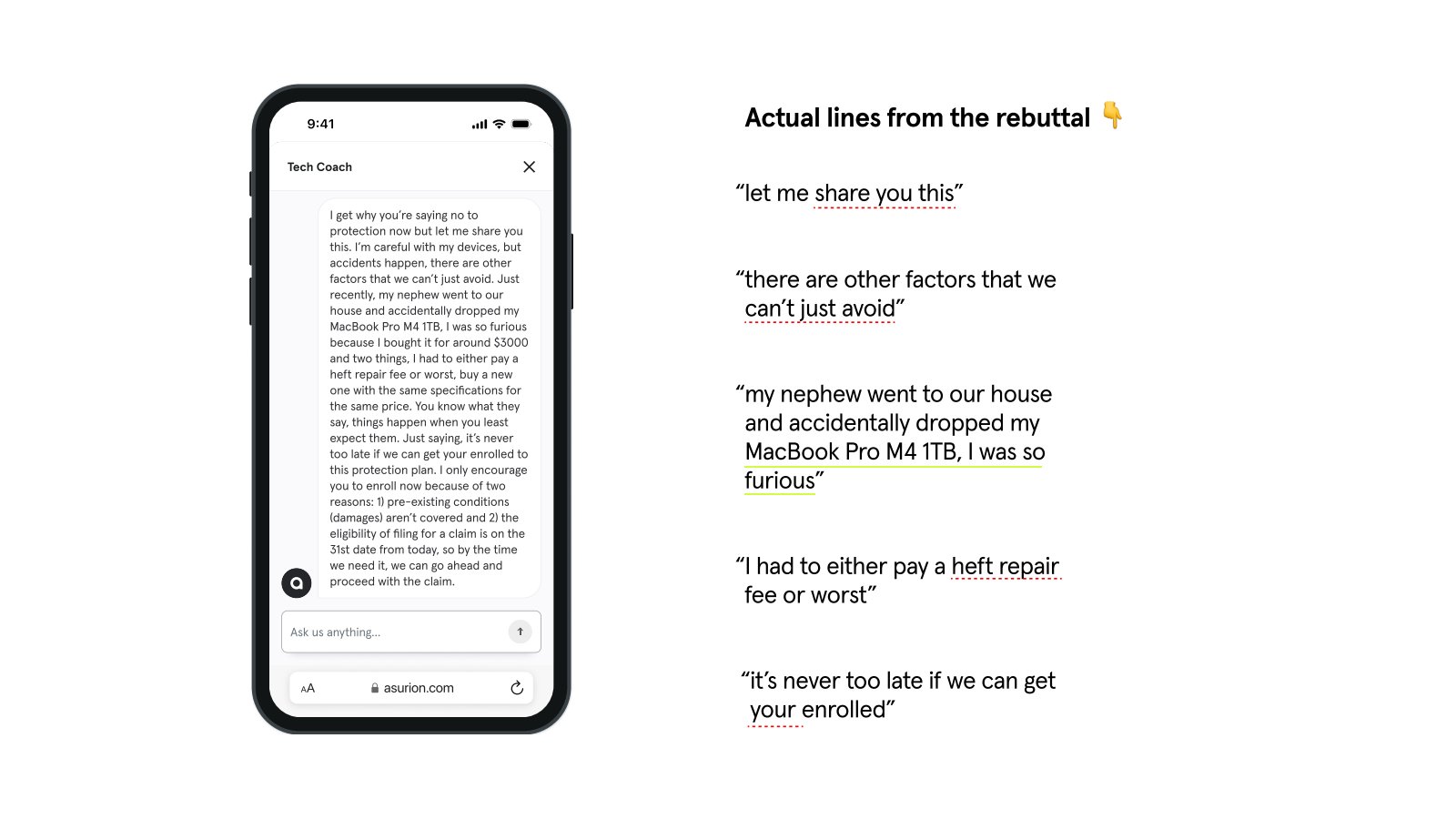
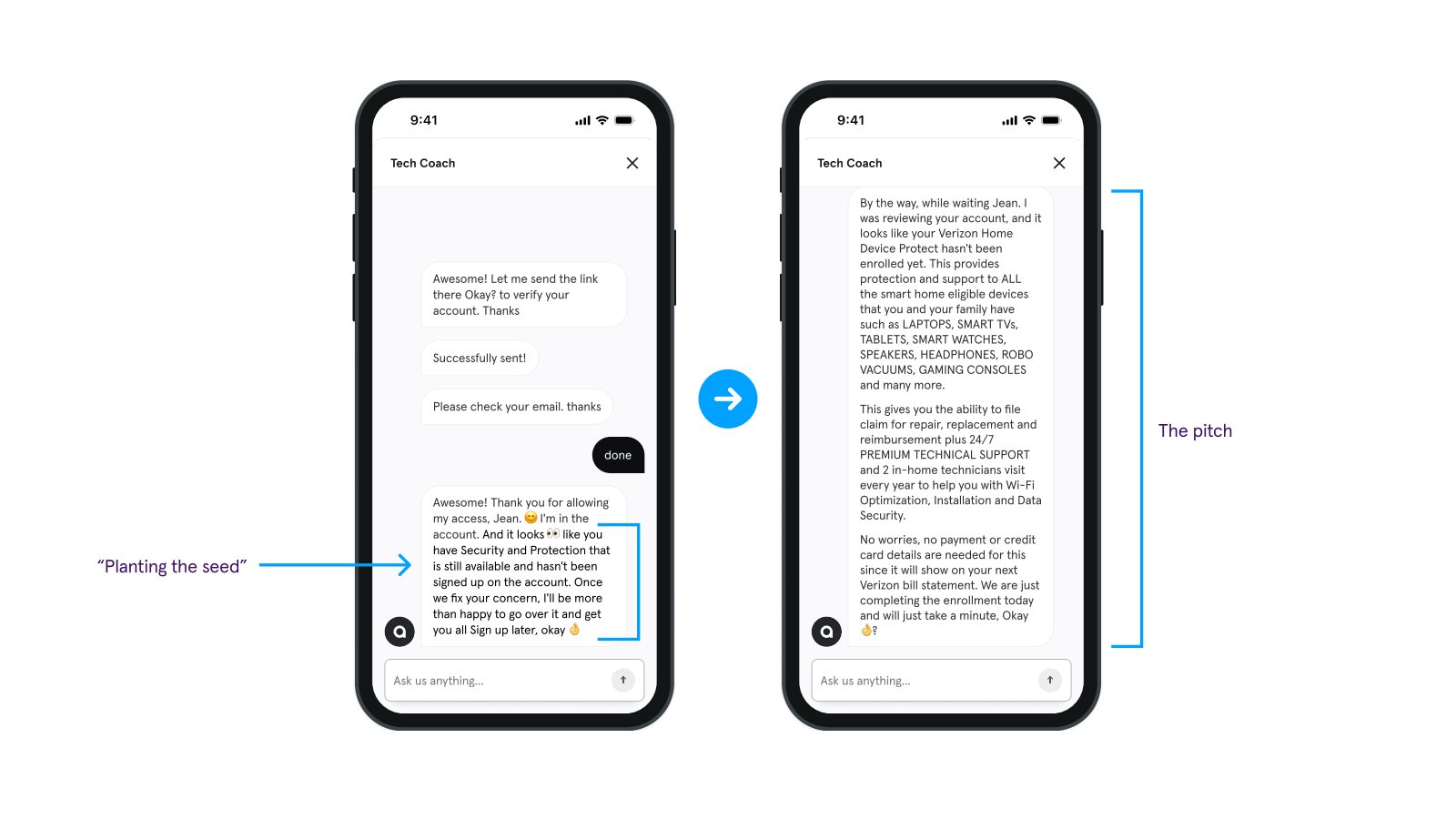
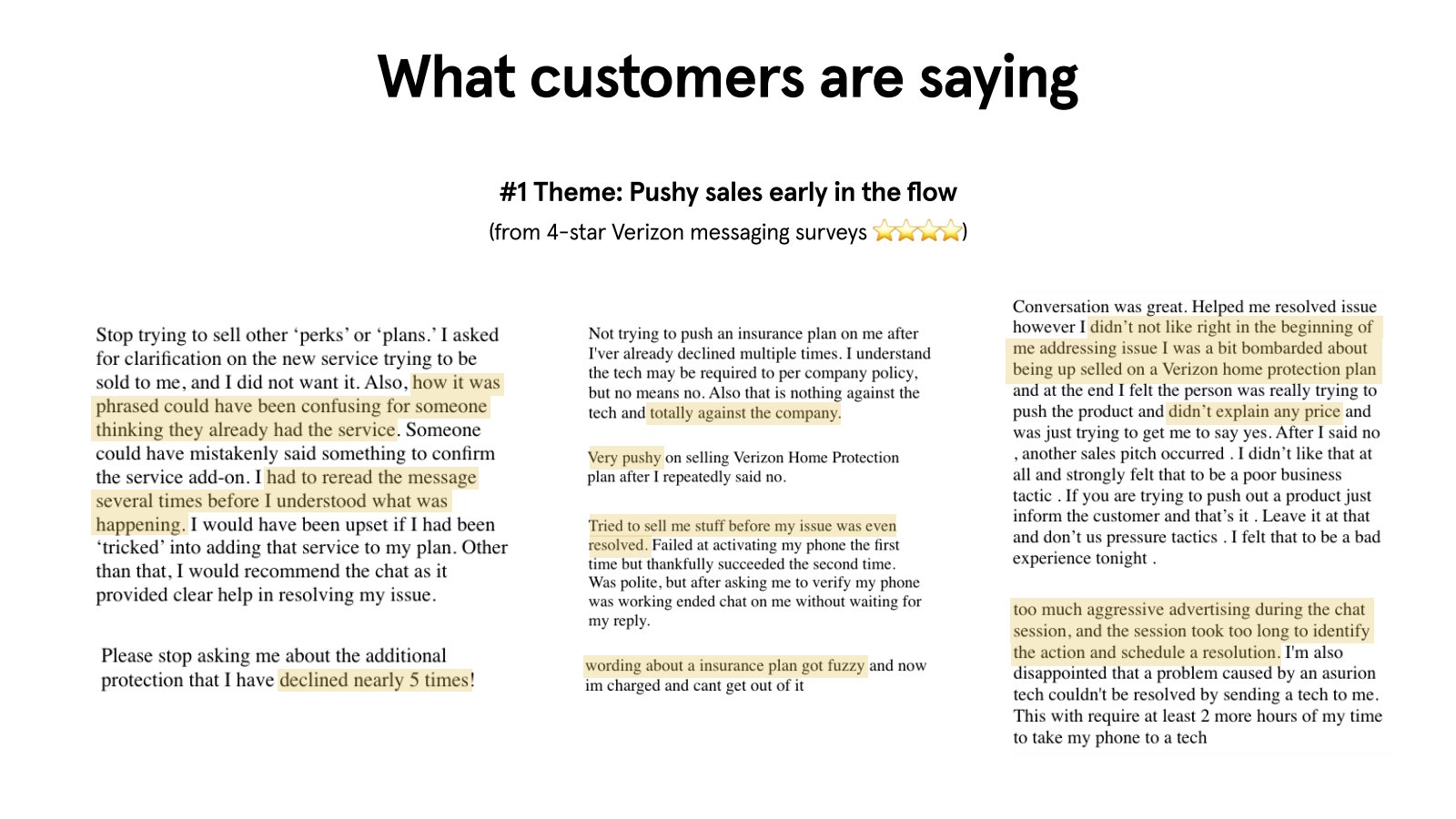
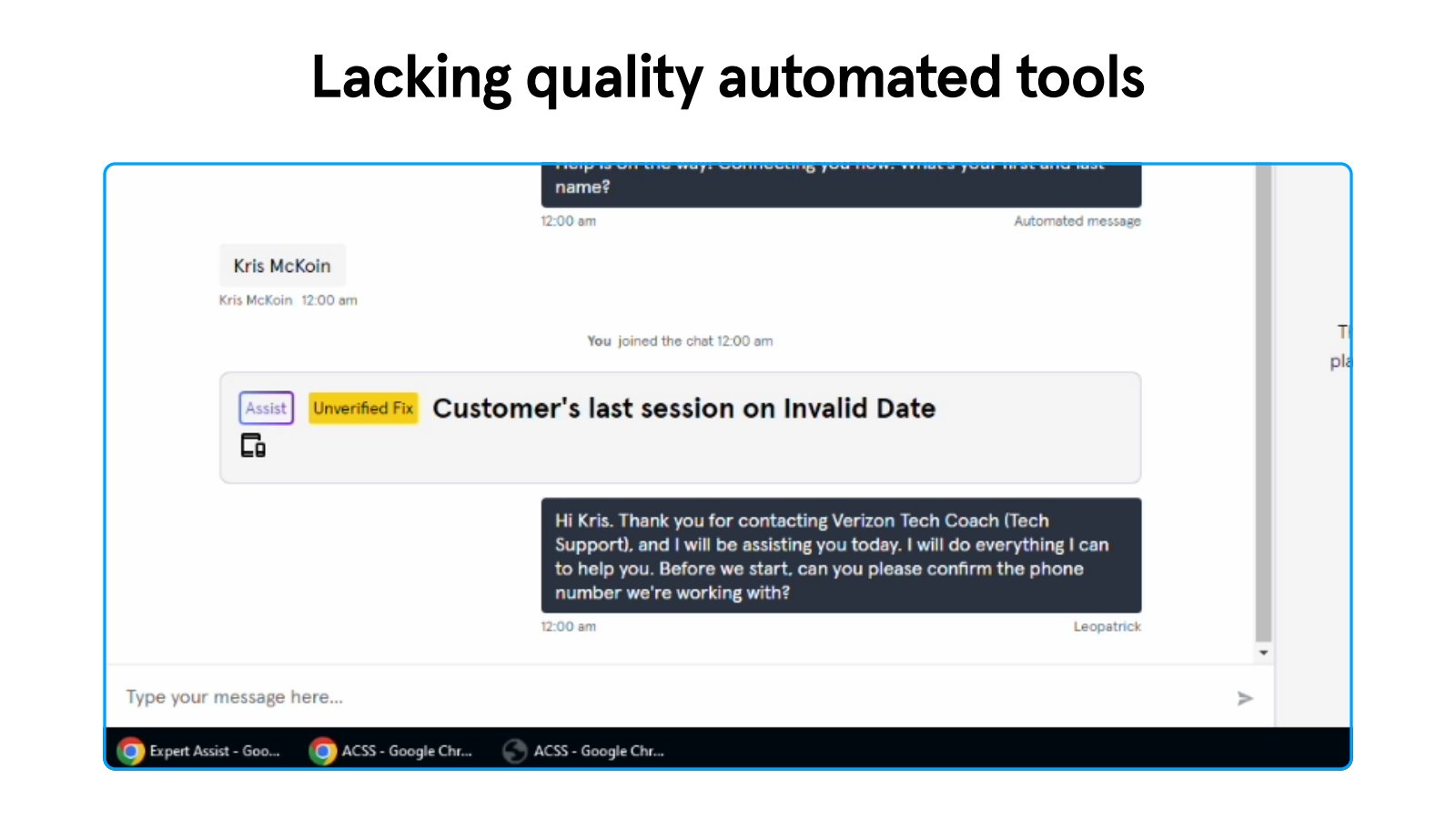
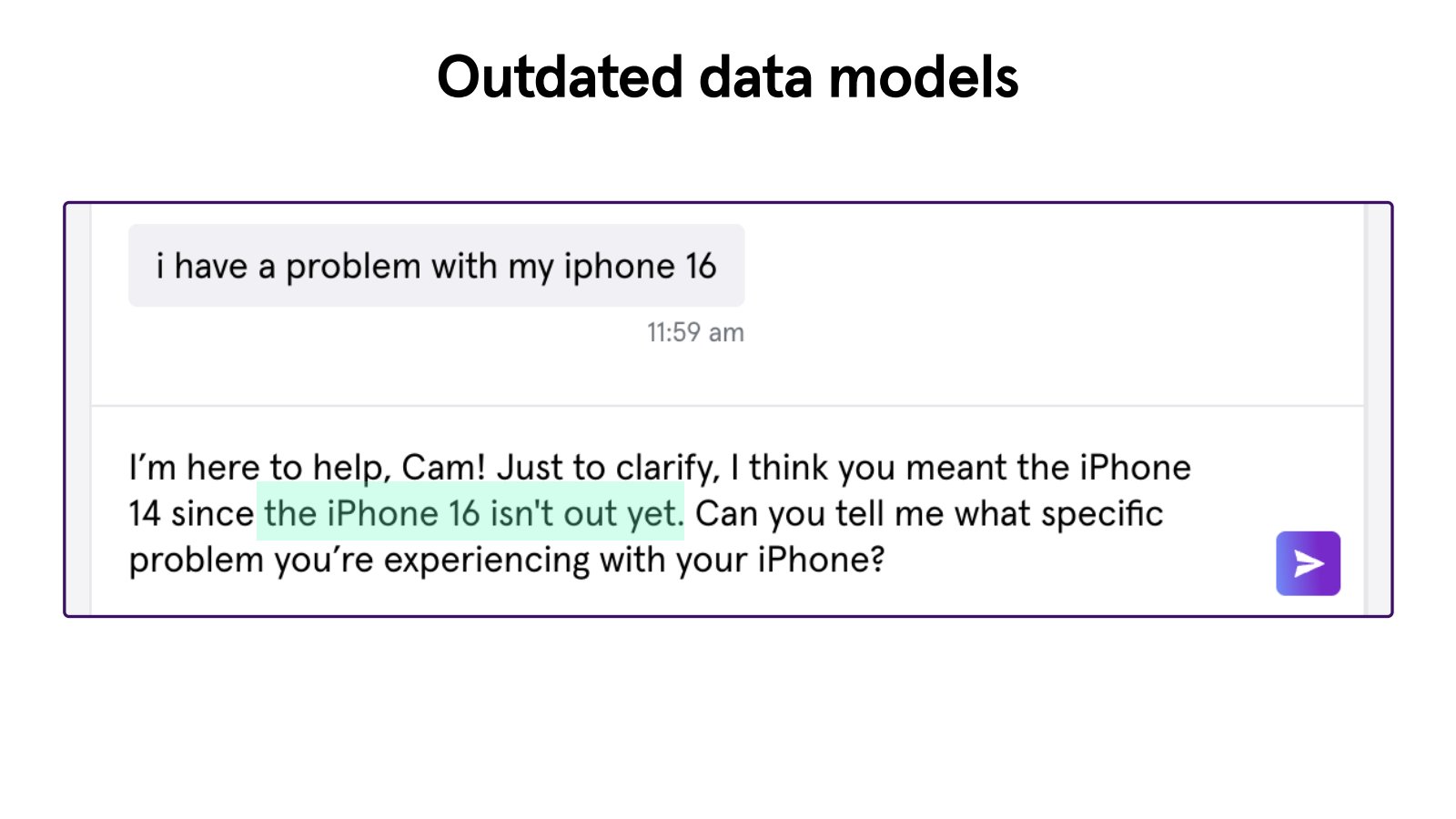
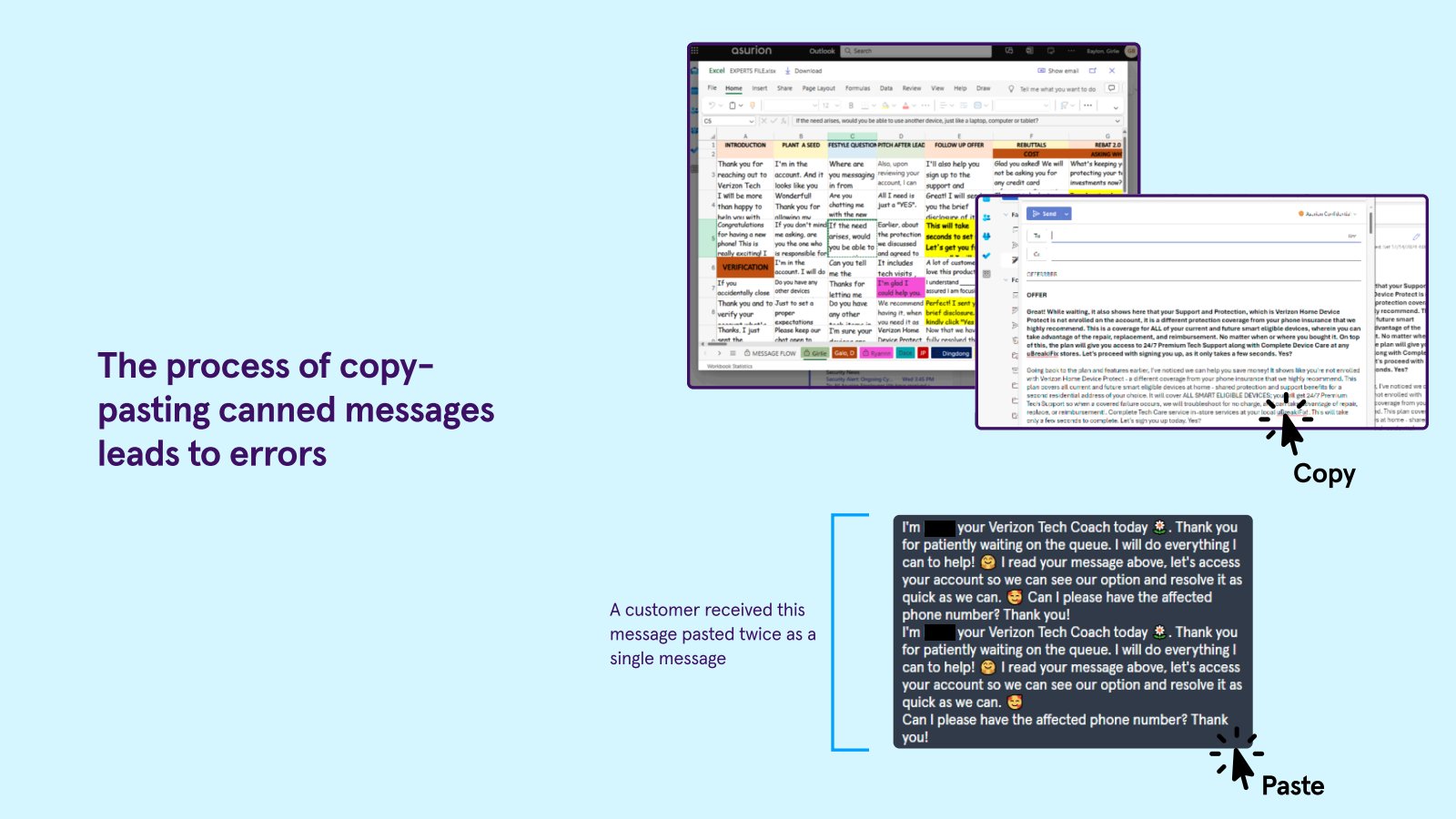
Communication quality and response speed, sales messaging that felt pushy rather than helpful, and repetitive interactions that should have been handled by automation long before reaching an expert.
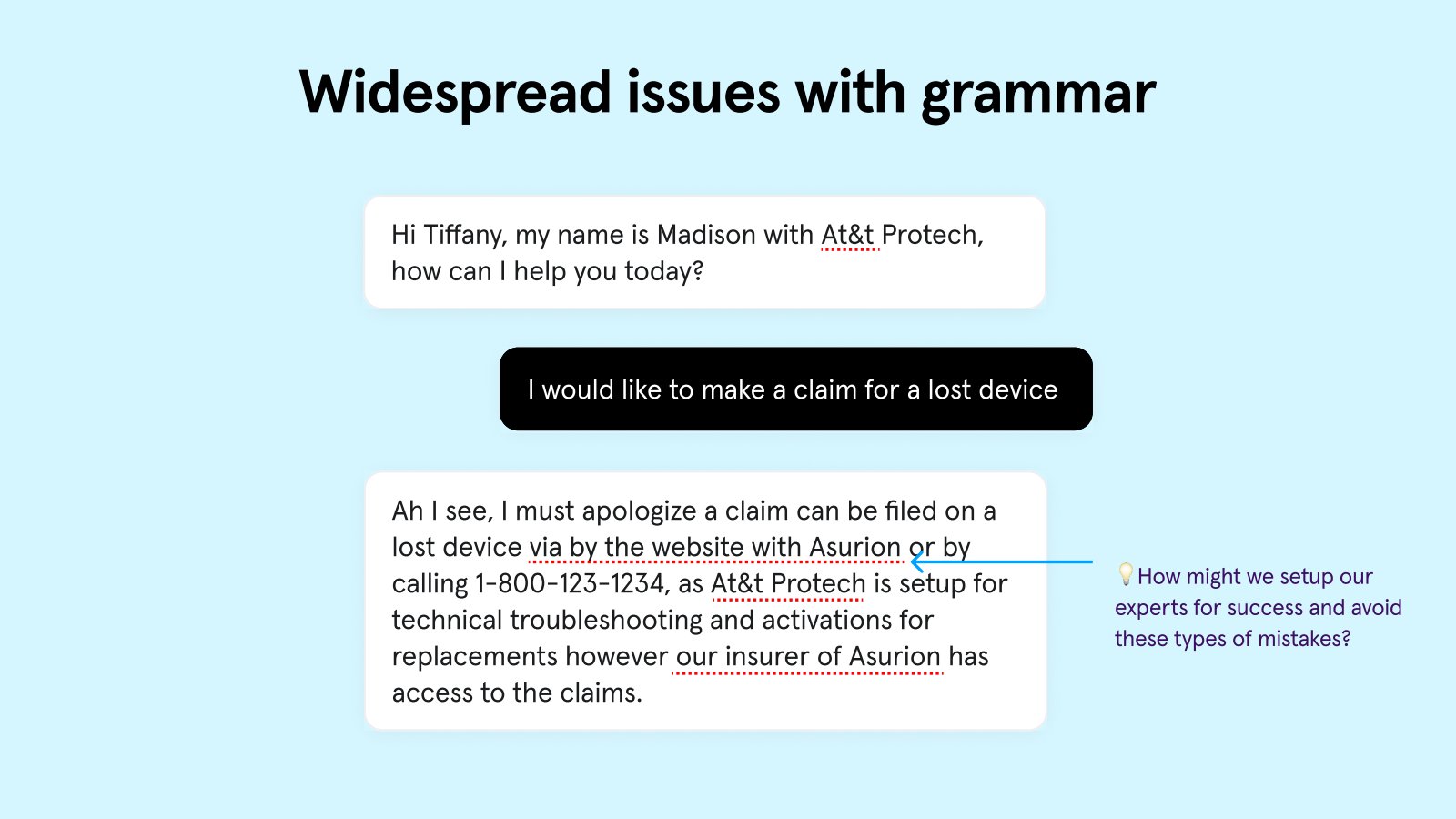
Communication quality
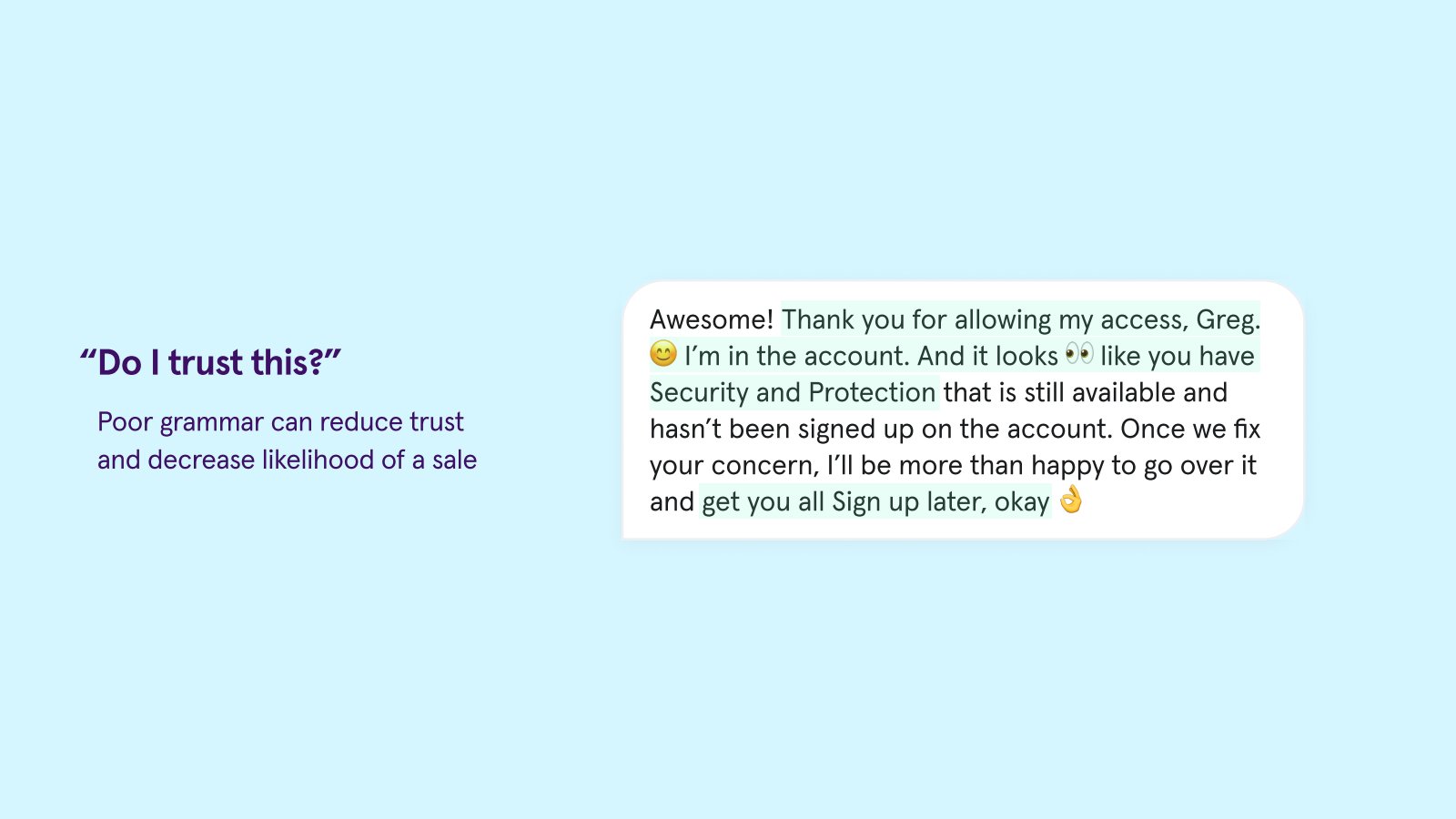
Frequent typos and poor grammar eroding trust in expert responses.
Sales experience
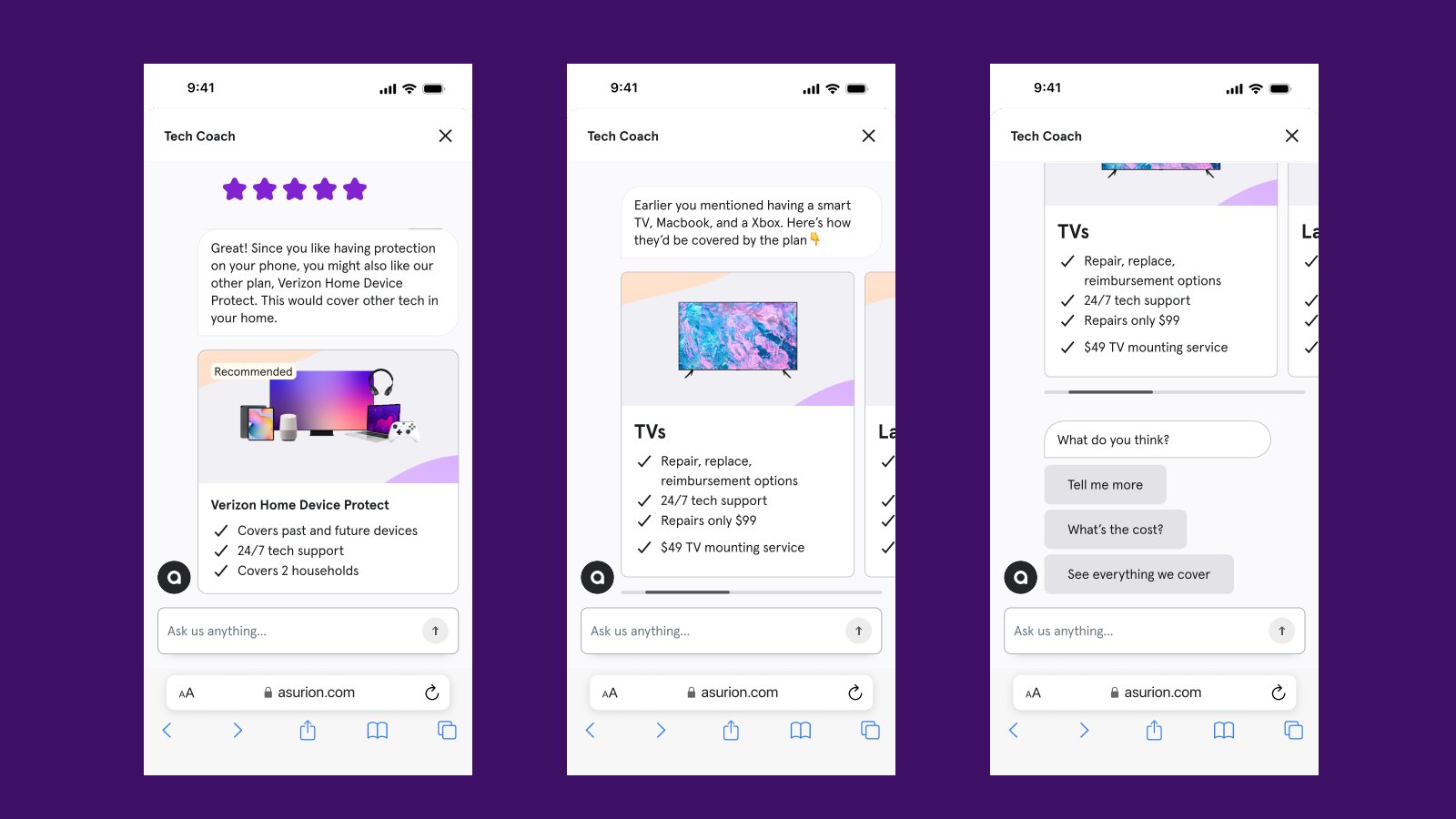
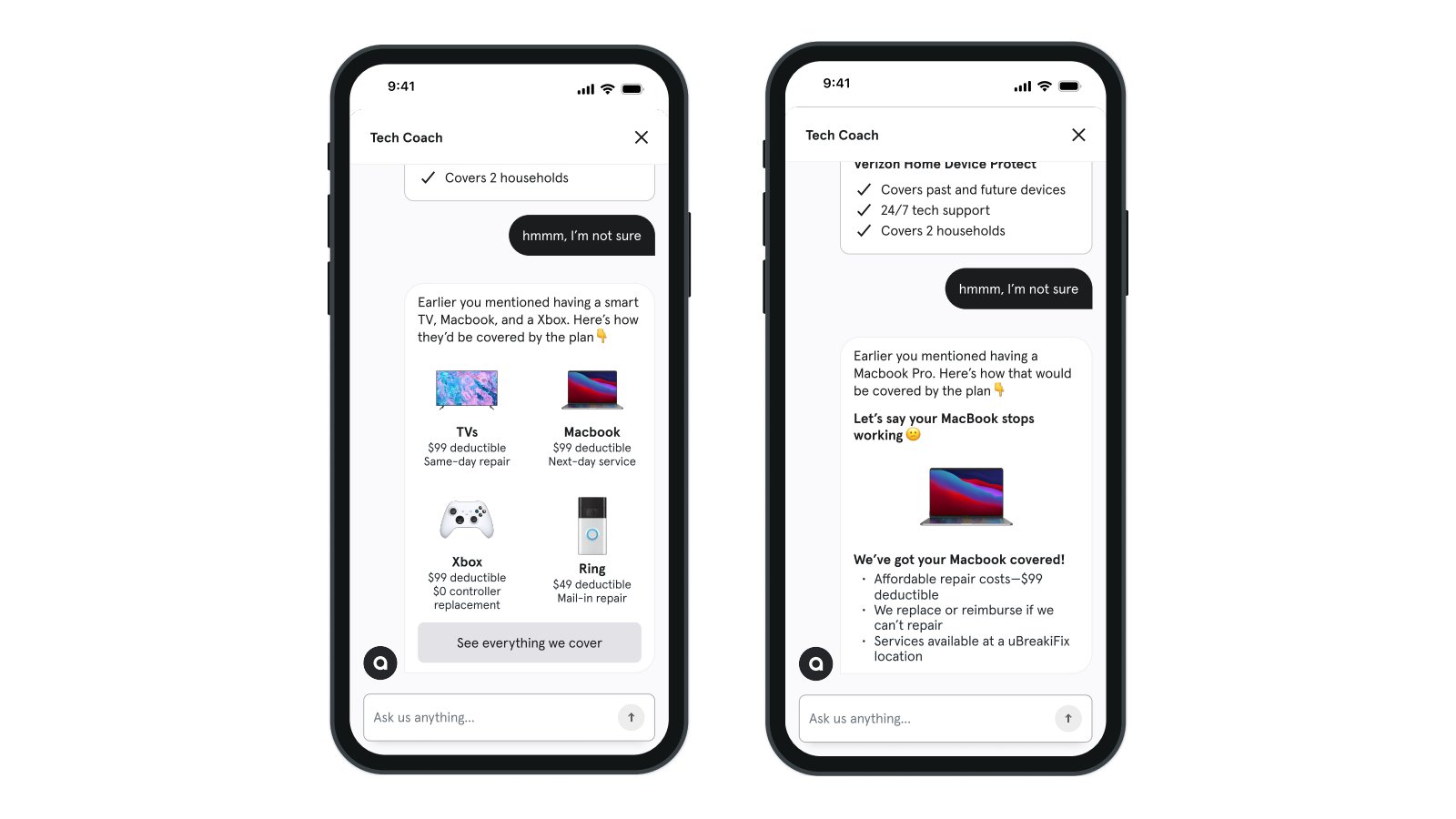
Awkward, pushy sales pitches disrupting natural conversation flow.
Operational efficiency
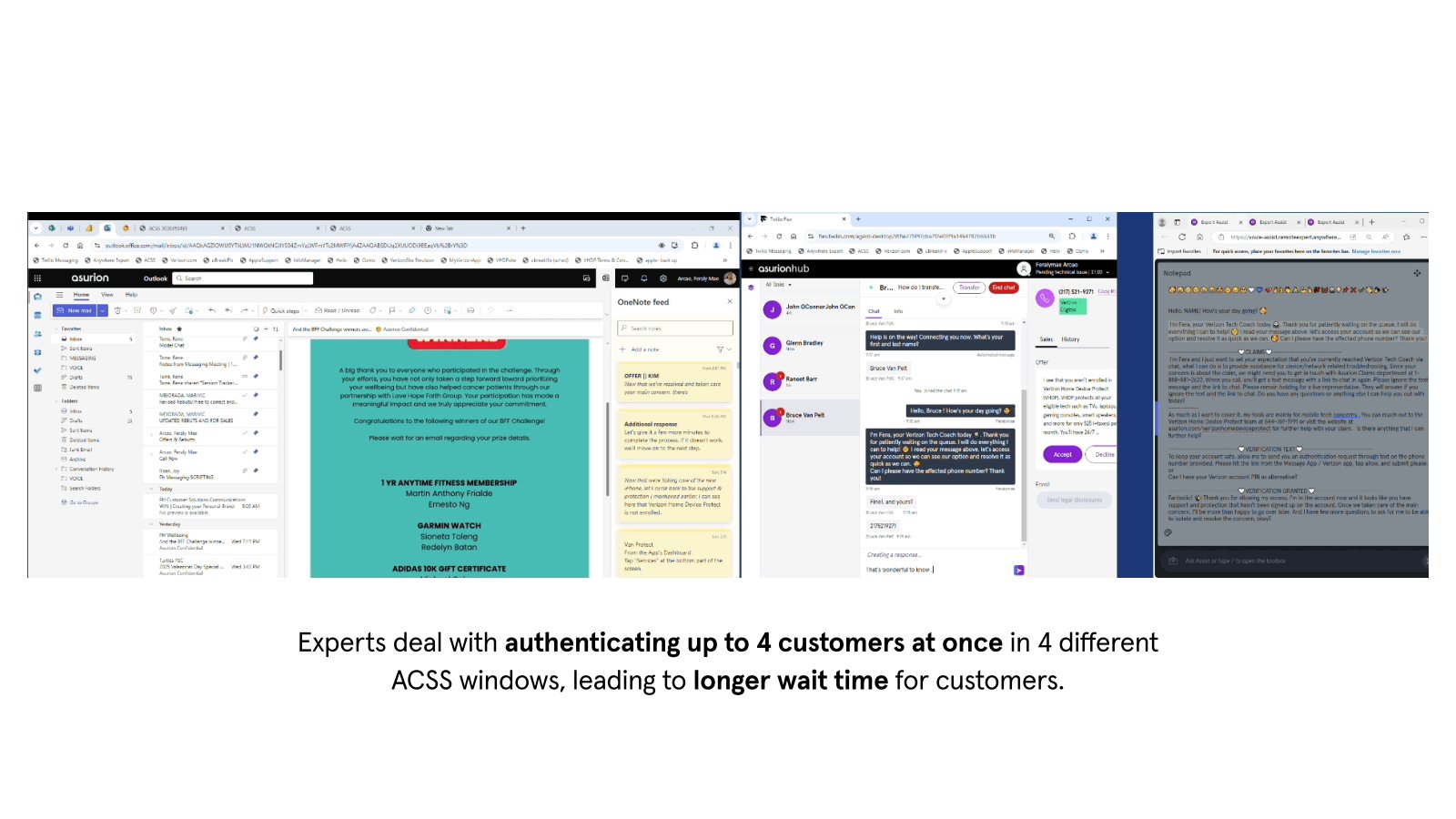
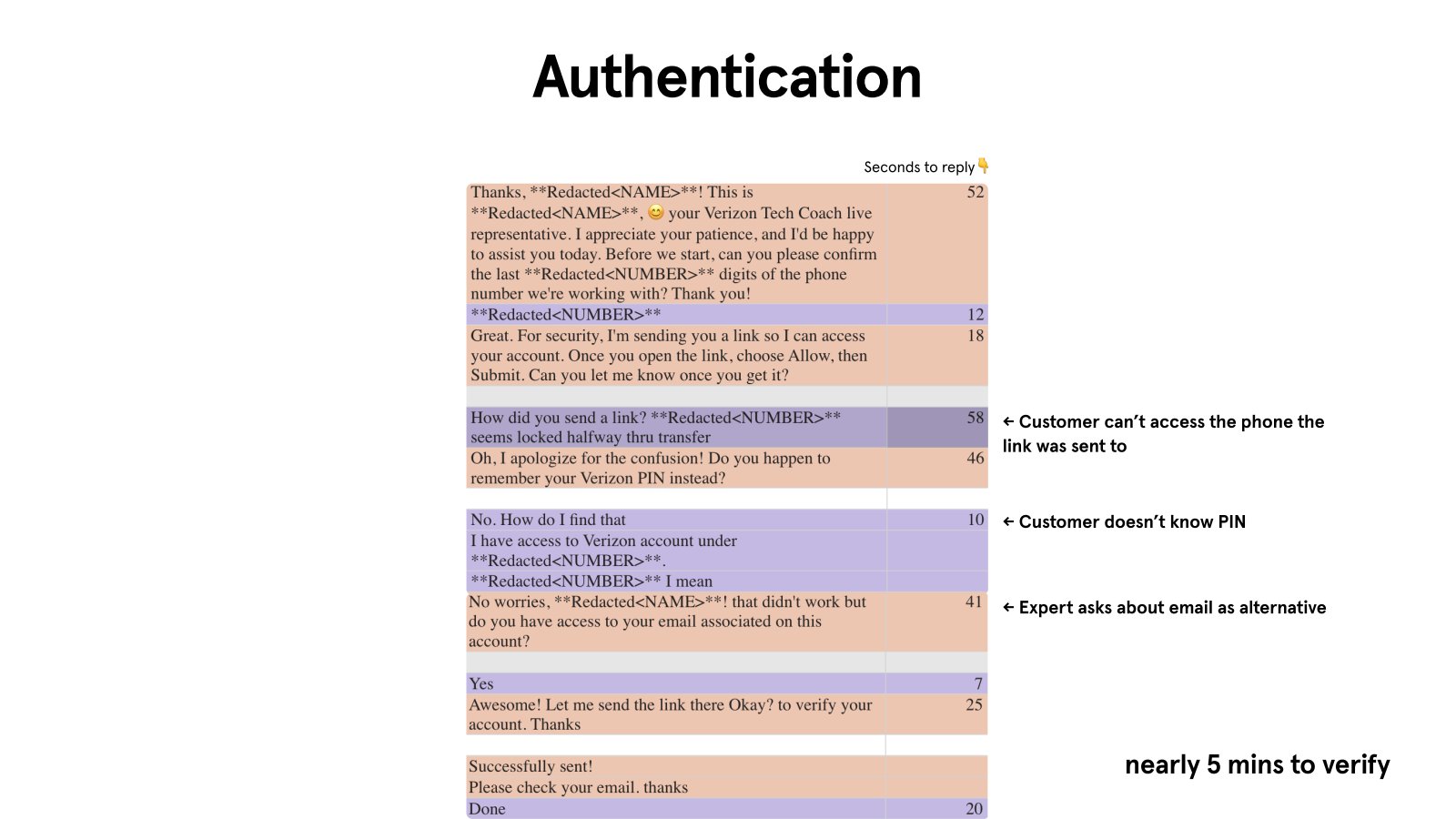
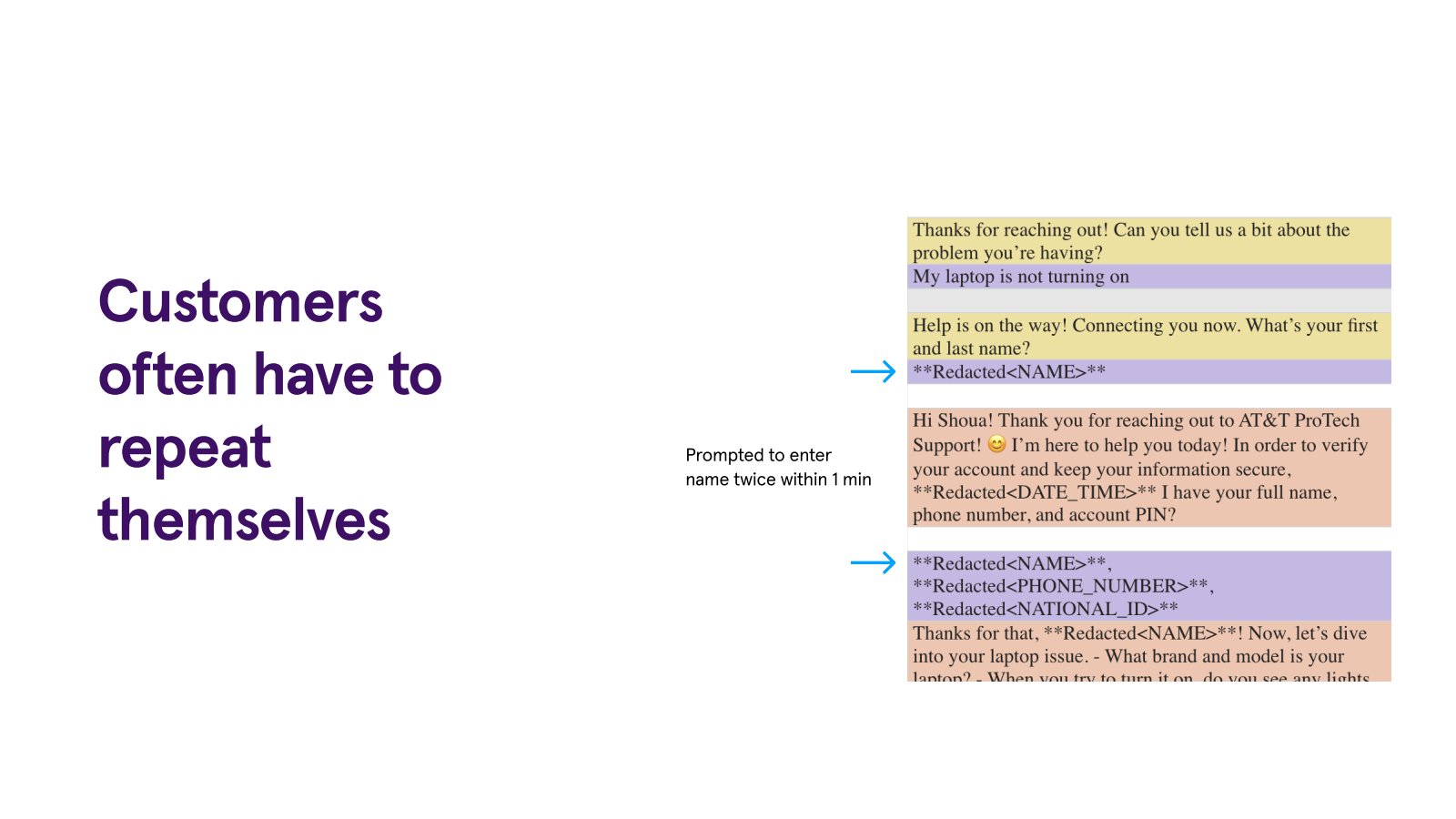
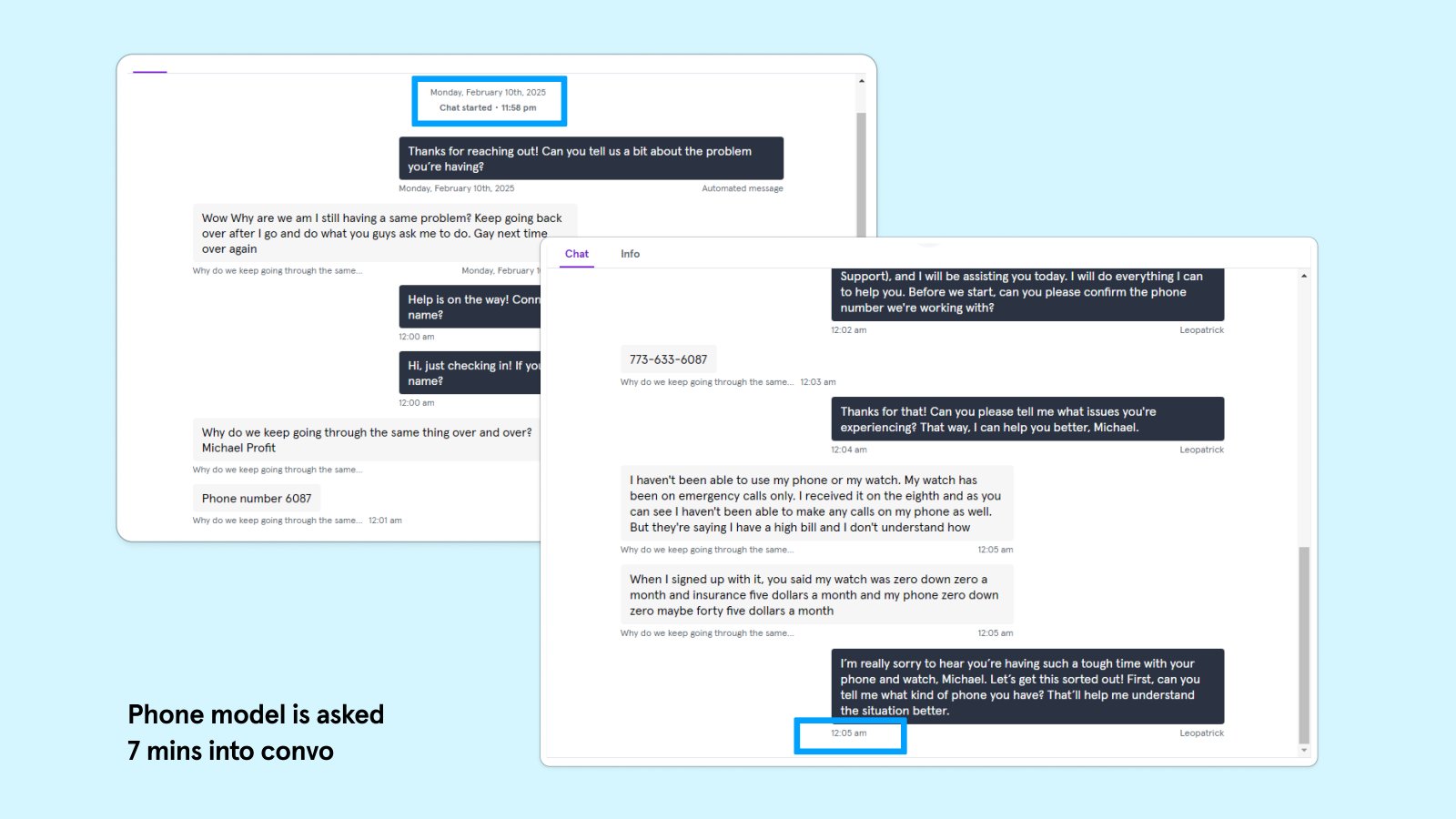
Inefficient flows requiring experts to manually collect basic customer info.
Bot utilization
Bot capabilities underused — not handling routine intake that it could own.
Designing against each finding
Three directions came out of the research, each aimed at a specific problem area above.
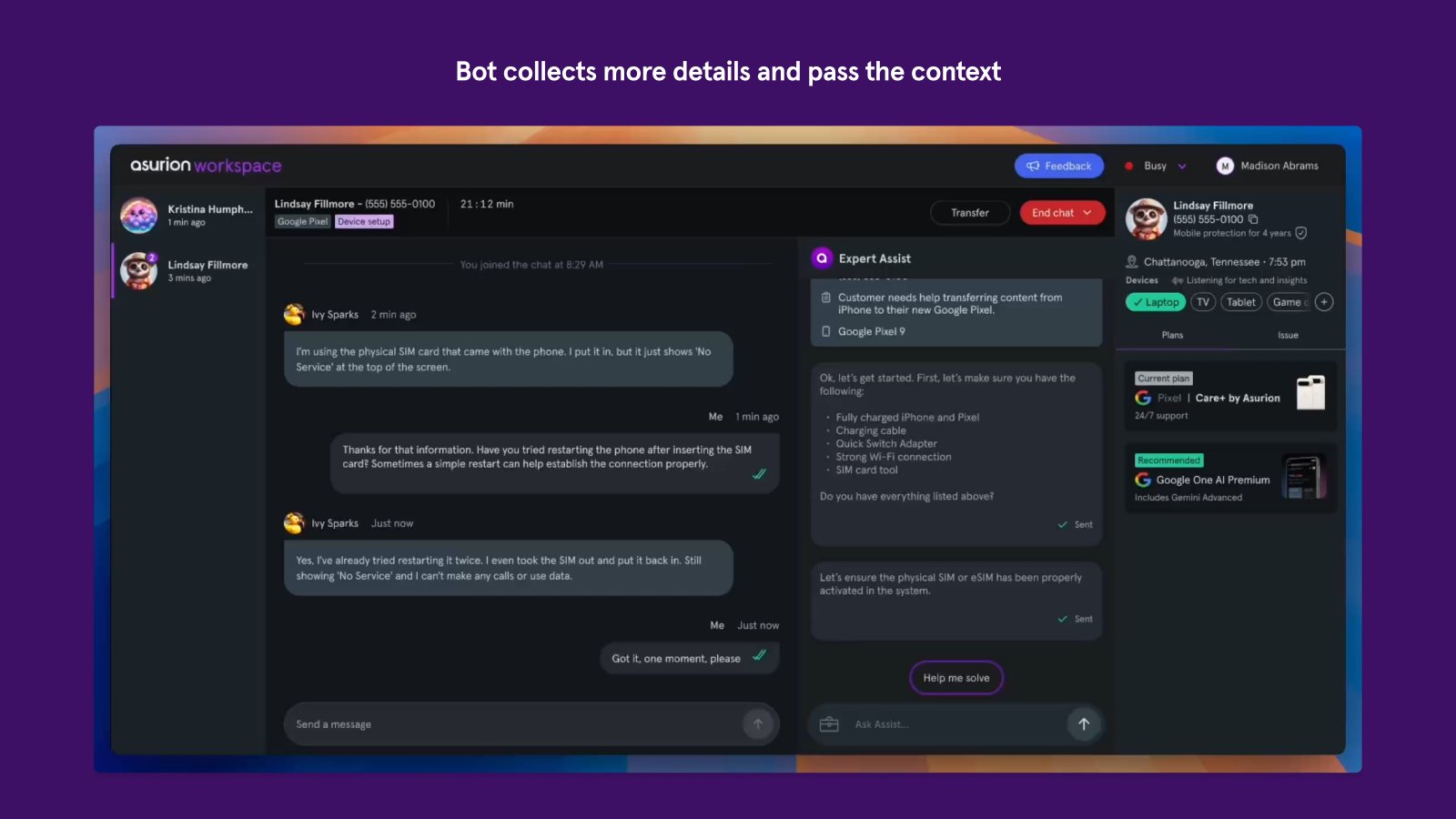
Streamlining the conversation & bot handoff
Shifted routine conversation setup to automation: bot-led intake, an auto-generated issue summary, and a ready-to-send first response waiting for the expert on arrival.
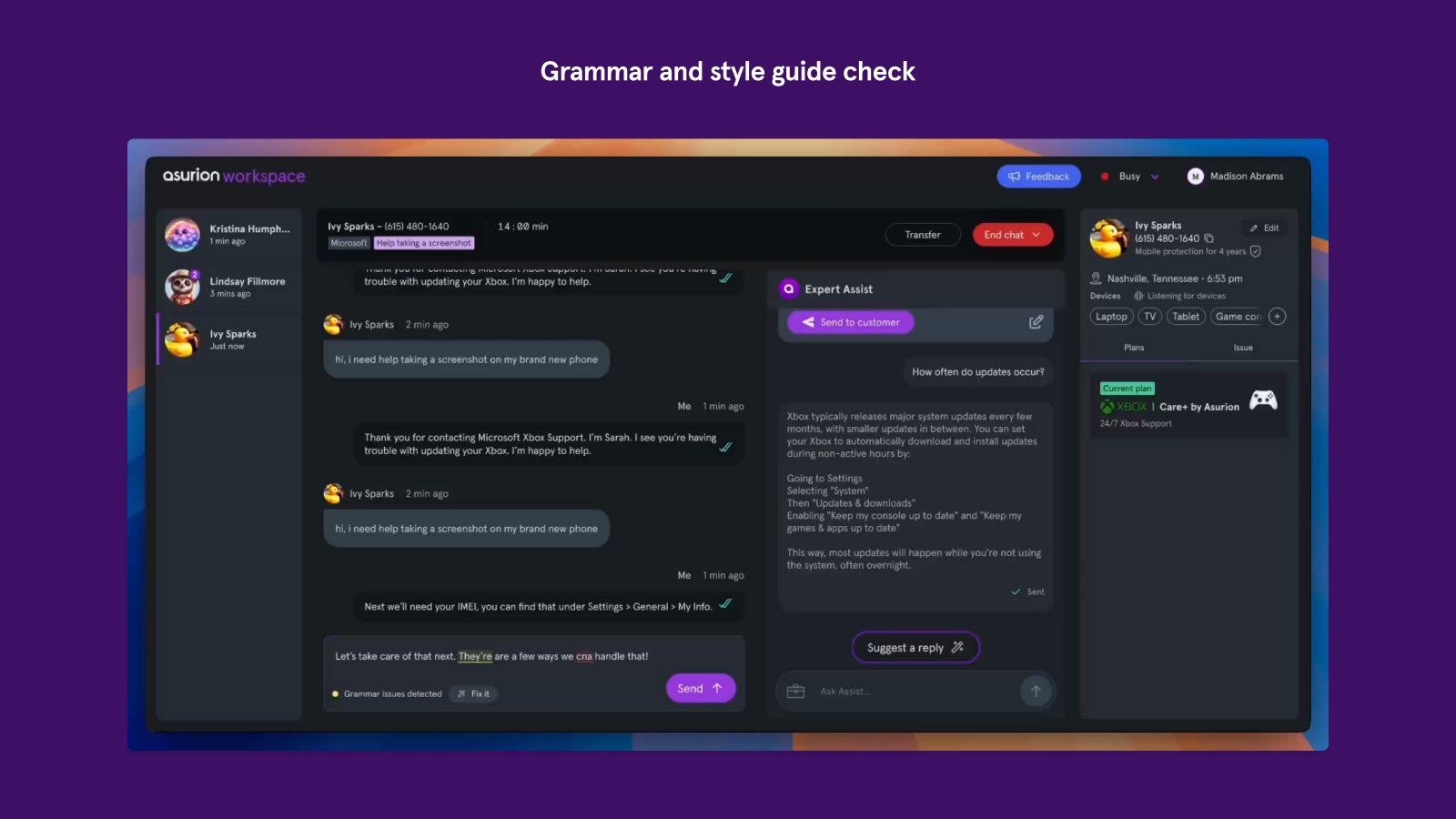
Grammar support
Designed support for the human side of messaging — catching grammar issues and style guide deviations before they reach the customer.
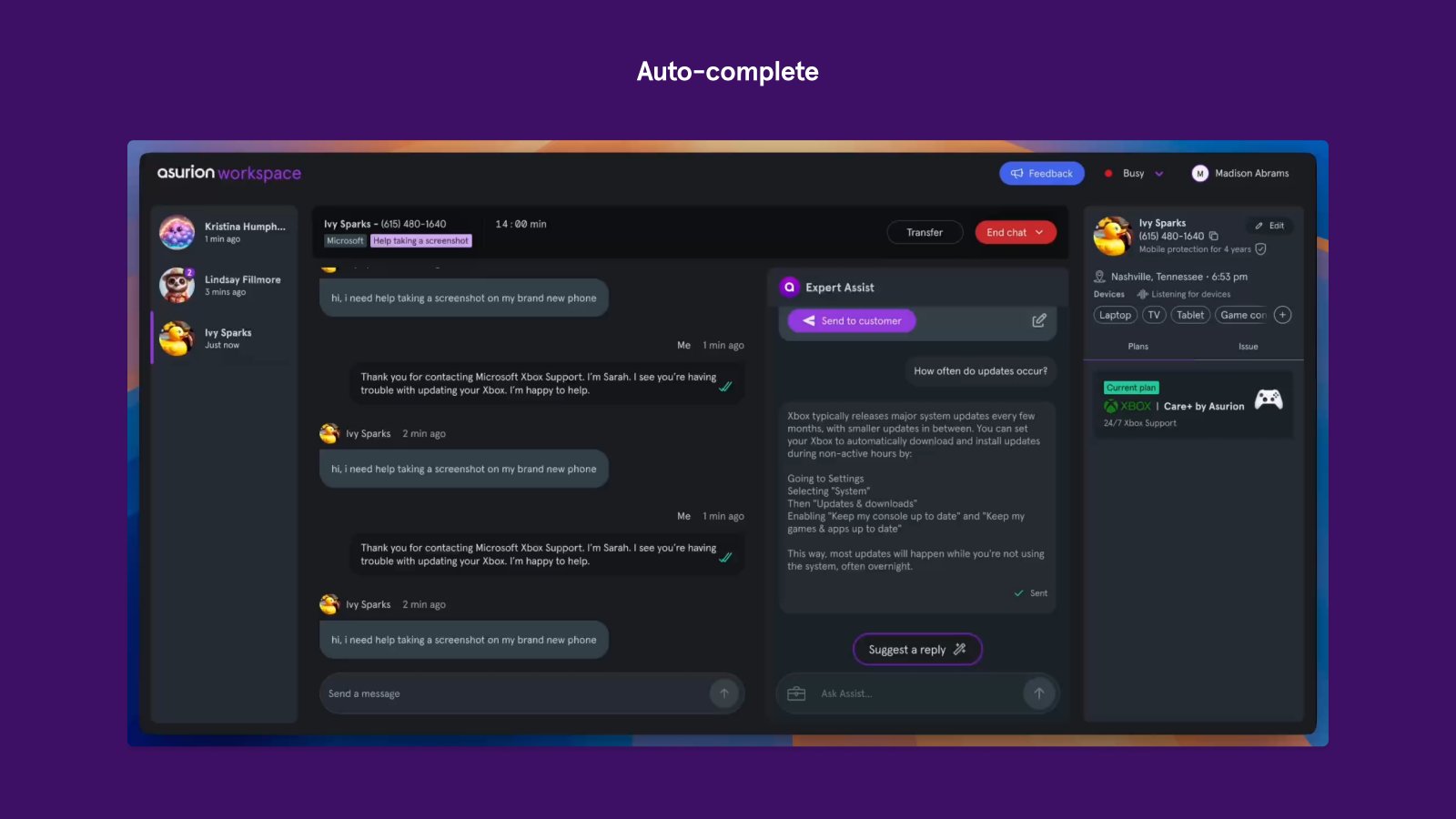
Auto-suggested responses
Paired with the bot handoff, suggested replies drawn from the conversation context gave experts a faster starting point than typing every response from scratch.
Here's the deck
The full research readout, presented to leadership.


I shared the findings with my team and leadership to create visibility for core issues the business needed to address, which helped get higher-priority initiatives onto the roadmap.